Why Do Dogs Eat Grass? Should You Worry?
Yes — grass eating is common and usually normal dog behaviour, not a sign of illness. Veterinary sources find most grass-eating dogs are not sick beforehand and do not vomit afterwards, so the habit alone is rarely something to worry about.
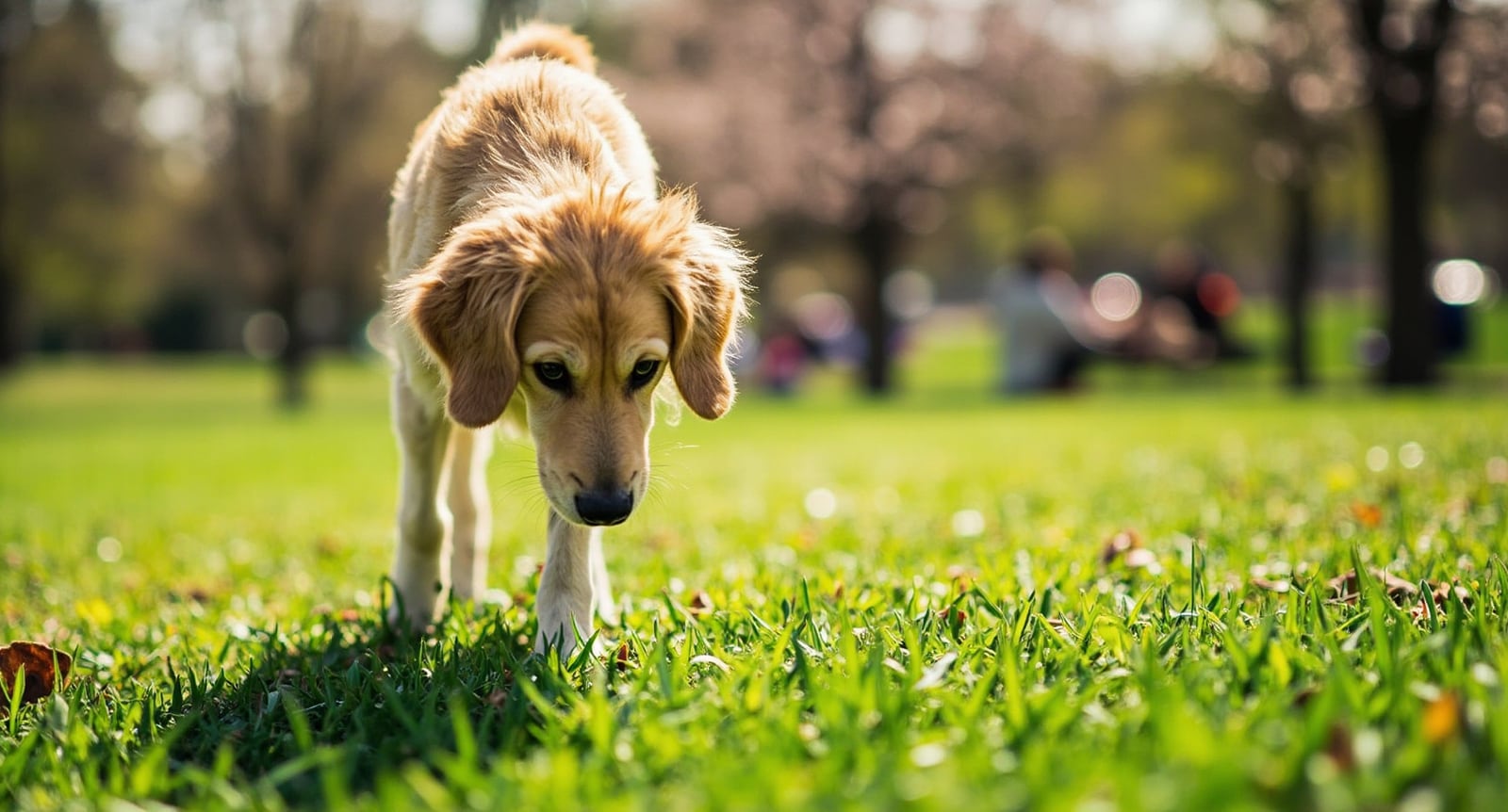
Why Do Dogs Eat Grass? Should You Worry? — editorial image.

Information sources
This article is built from published veterinary and animal-behaviour sources — the professional references named in the article itself — and every figure it cites appears in those sources. It is general information, not veterinary advice: if your pet is unwell or the behaviour changes suddenly, please consult your veterinarian.
AIBUYLAB does not sell pet products, and this article is not shopping guidance — we earn no commission from any purchase. Where our site covers pet tech products, that coverage lives in our reviews and best lists, scored on our published 10-point index.
The Short Answer
Dogs eat grass for the same mix of reasons wild canids did: instinct and scavenging, a little dietary fibre, and sometimes boredom, loneliness or anxiety. The self-medication story — eating grass to soothe an already-upset stomach — is the popular explanation, but the published evidence points the other way: fewer than a quarter of dogs vomit afterwards and only about one in ten showed signs of illness beforehand. Occasional grazing in an otherwise well dog needs no intervention at all. The reasons to pay attention are frequency, accompanying symptoms, and what has been sprayed on the lawn.
Why It Happens
- Instinct and scavenging. VCA notes that wild canids ate whole prey including the plant-filled stomach contents, and that stool samples show 11–47% of wolves eat grass. Domestic dogs kept the scavenger's appetite for plant material.
- Fibre and digestion. Dogs need roughage, and grass is one source; a diet short on fibre affects digestion and stool passage, so grazing can serve a real digestive need.
- Boredom, loneliness and anxiety. VCA observes that grass eating often increases as owner contact time decreases, and that anxious dogs may graze as a self-soothing behaviour — the canine equivalent of nervous nail-biting.
- An empty stomach. Frantic grass-gobbling followed by vomiting yellow foam is a pattern AKC Chief Veterinary Officer Dr. Jerry Klein attributes to bile irritating an empty stomach; a small meal at morning and bedtime often resolves it.
What the Sources Actually Say
VCA Animal Hospitals' page "Why Dogs Eat Grass", written by Dr. Krista Williams, Dr. Malcolm Weir and Dr. Lynn Buzhardt and last updated in February 2025, covers the causes, the vomiting and illness statistics, the pesticide and parasite risks and the when-to-worry signs. The American Kennel Club's article, updated in 2026, reports a small University of California, Davis School of Veterinary Medicine study with nearly identical figures — 22% of dogs vomit after eating grass and 9% showed signs of illness beforehand — concluding that grass and plant eating is normal behaviour in domestic dogs. We describe that study as reported by AKC and VCA rather than linking a primary publication, because the sources we verified cite it secondhand.
What You Can Do
- Do nothing if the dog is wellOccasional grazing in a dog with a normal appetite, energy and stool is not a symptom. VCA is explicit that for instinctive grazers, intervention can be counterproductive.
- Keep the lawn safeDo not let your dog graze on lawns treated with herbicides or pesticides — VCA flags chemically treated lawns as the real plant-related toxicity risk.
- Keep parasite prevention currentGrass can carry faecal residue, so hookworm and roundworm exposure is a real risk for a dog that grazes. Prevention is the whole answer here.
- Address boredom and anxietyIf grazing rises when you are out, add walks, play, puzzle toys or daycare — VCA links grass eating to reduced owner contact time.
- Manage the empty-stomach patternIf frantic grazing leads to yellow-foam vomiting, a small meal at morning and bedtime is the AKC-veterinarian-suggested fix.
When to See a Vet
When to See a Vet
- Grass eating becomes frequent or excessive
- It appears with vomiting, diarrhoea, weight loss, decreased appetite, bloody stool, lethargy or lip licking
- You suspect pesticide or herbicide exposure on a treated lawn
- Stomach discomfort accompanies the grazing — VCA notes it can signal gastric reflux, inflammatory bowel disease or pancreatitis, which need ruling out
- You suspect parasite exposure; VCA suggests faecal or blood testing
Occasional grazing with no other sign is not on this list. That is the normal case.
Related Reading
- Best automatic feeders for picky eaters — if mealtimes are part of the pattern, a scheduled feeder can help regulate appetite
- Best GPS trackers for dogs — for dogs whose grazing happens on walks rather than in the garden
- Best pet cameras — a camera with barking detection tells you what happens when you are out
Frequently Asked Questions
Why do dogs eat grass?
Grass eating is common and usually normal. VCA lists instinct and scavenging (11–47% of wolves eat grass), a fibre need, and psychological causes such as boredom, loneliness, anxiety and attention-seeking, with grazing increasing as owner contact time decreases. Source: this article, Why Do Dogs Eat Grass? Should You Worry?
Do dogs eat grass because they are sick?
The evidence argues against it. VCA reports that fewer than 25% of dogs vomit after eating grass and only about 10% show signs of illness first; AKC cites a UC Davis study with nearly identical figures (22% and 9%) that concluded grass eating is normal behaviour in domestic dogs. Source: this article, Why Do Dogs Eat Grass? Should You Worry?
Is eating grass dangerous for dogs?
The grass itself usually is not. The real risks are what is on it: herbicides and pesticides on treated lawns can be toxic, and dogs can pick up intestinal parasites such as hookworms or roundworms from faecal residue in grass. Source: this article, Why Do Dogs Eat Grass? Should You Worry?
Should I stop my dog from eating grass?
Usually no. For an instinctive grazer that is otherwise well, VCA warns behaviour modification may do more harm than good. Redirect with treats or a "leave it" cue, and see a vet if the habit becomes frequent or comes with other symptoms. Source: this article, Why Do Dogs Eat Grass? Should You Worry?
- 2026-11-07 — First published: health Q&A paraphrased from VCA Animal Hospitals and the American Kennel Club (veterinary-authored sources), with the UC Davis study described as reported by those sources. Health note: this article is general information, not veterinary advice.
You may also like
- Guide
Why Do Dogs Eat Poop? (Coprophagia Causes & How to Stop It)
Coprophagia is common and usually curable. Veterinary sources on behavioural versus medical causes, what actually works to stop it, and when to see a vet.
- Guide
Why Is My Dog Panting So Much?
Panting is how dogs cool down, so most of it is normal. Veterinary sources on normal versus abnormal panting, the resting breathing-rate numbers, and the emergencies.
- Guide
Why Is My Dog Shaking? 7 Causes (And When It's an Emergency)
Dog shaking from cold to emergency: seven causes with veterinary sources, the red flags that make it an emergency, and what to do at each stage.